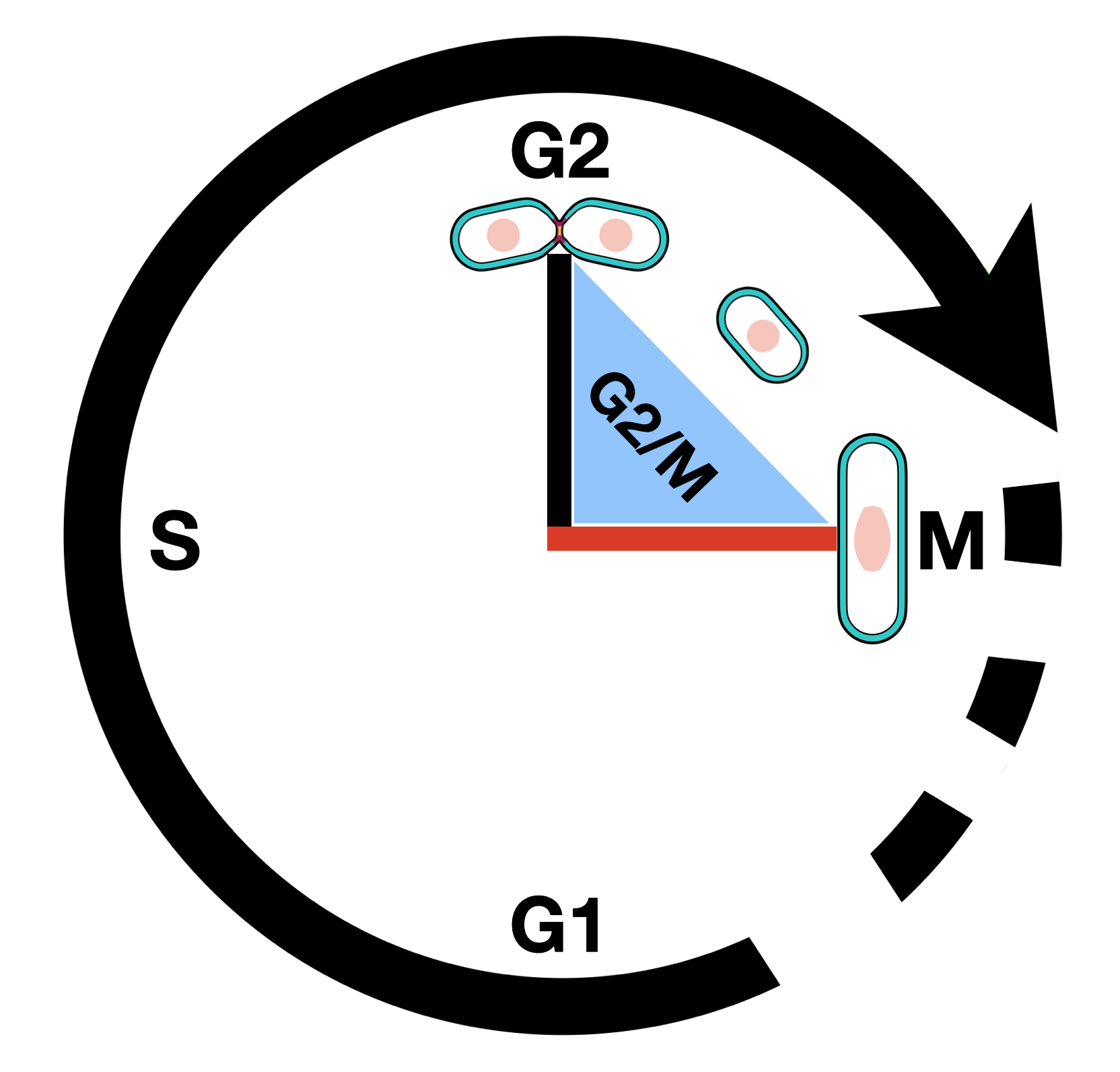
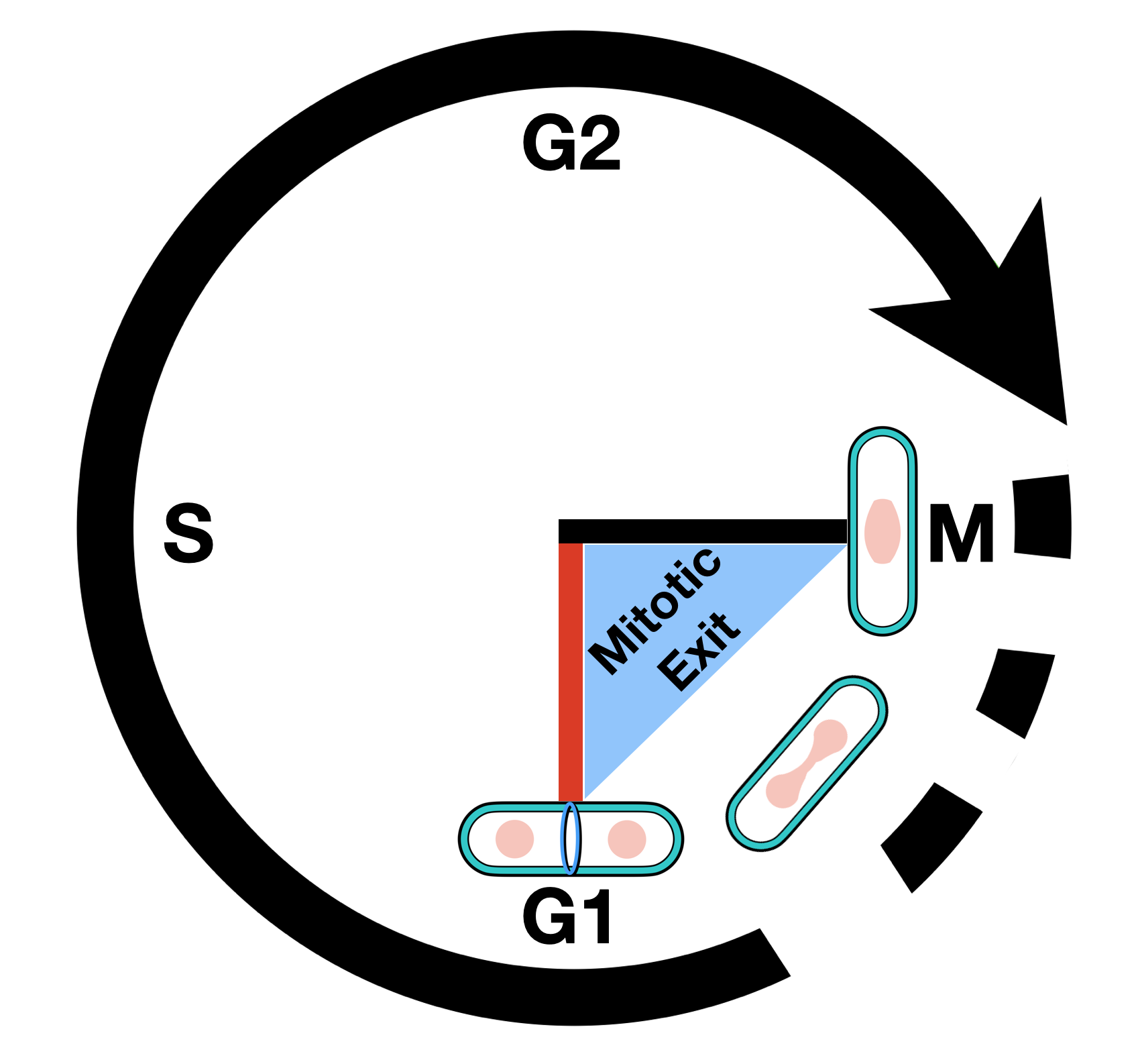
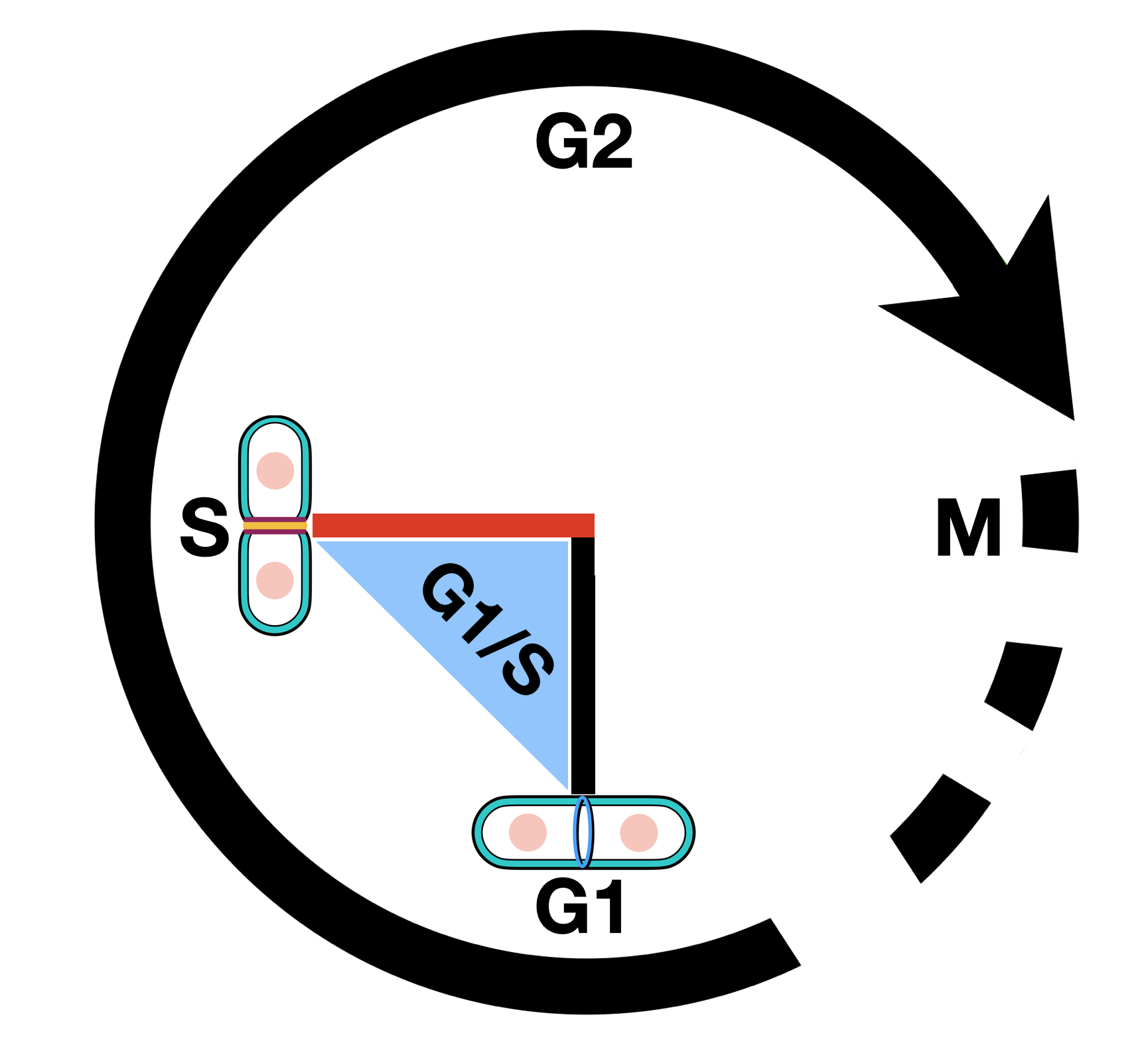
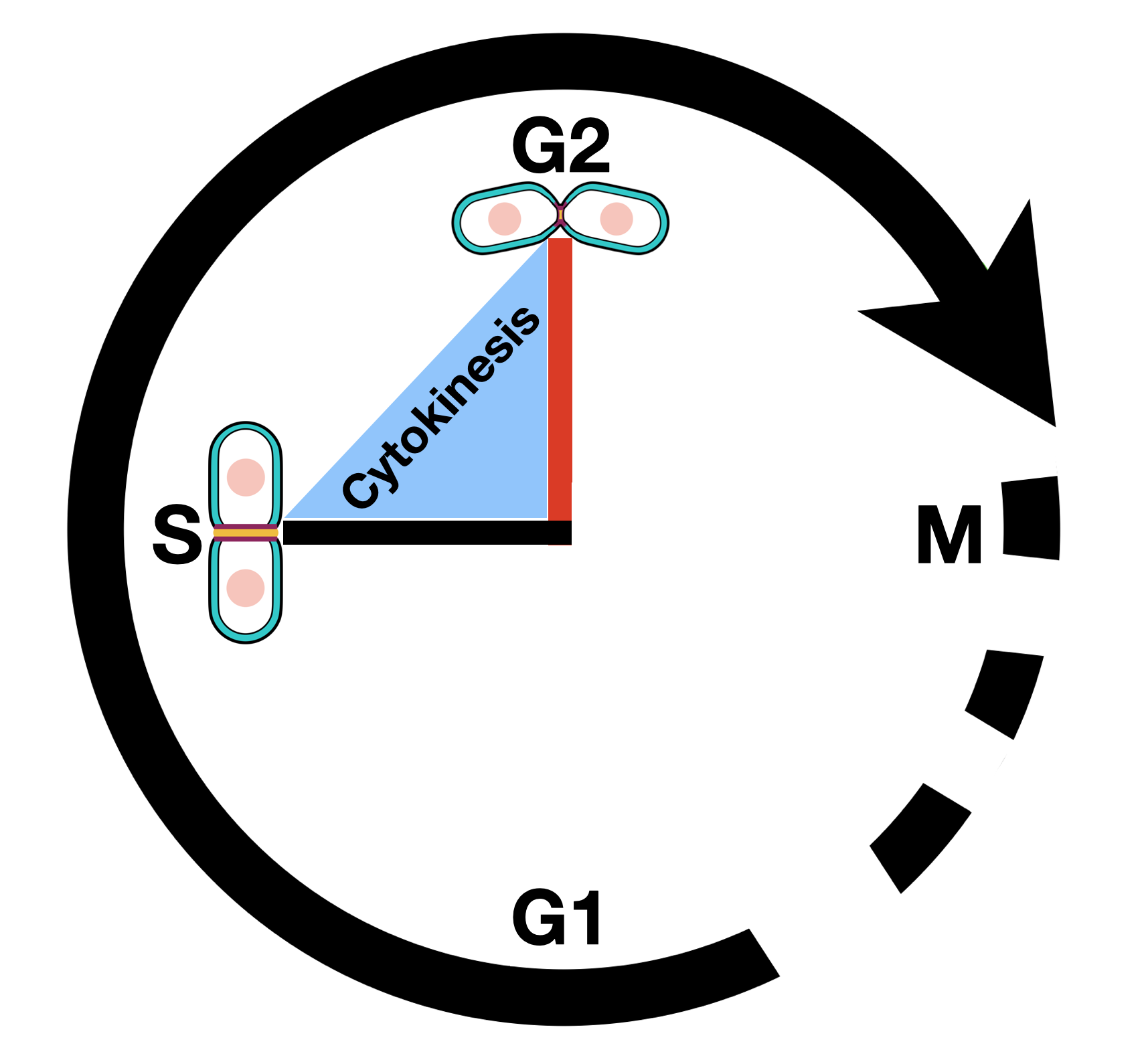
The fission yeast cell cycle progresses through G1, S, G2, and M phases, guided by a cell cycle clock that precisely times each step. Checkpoints act as “guards,” ensuring DNA is accurately replicated and chromosomes are properly segregated. During S phase, DNA is duplicated, and in M phase, mitosis and cytokinesis produce two genetically identical daughter cells, maintaining proper growth and division.
Figure 2: This Cell Cycle Clock figure illustrates the transitions through the four phases: the red pointer indicates the current phase, while the black pointer shows the previous phase.
1. Peng X, Karuturi RK, Miller LD, Lin K, Jia Y, Kondu P, Wang L, Wong LS, Liu ET, Balasubramanian MK, Liu J. Identification of cell cycle-regulated genes in fission yeast. Mol Biol Cell. 2005;16(3):1026-42. doi: 10.1091/mbc.e04-04-0299.
2. Kaykov A, Nurse P. The spatial and temporal organization of origin firing during the S-phase of fission yeast. Genome Res. 2015;25(3):391-401. doi: 10.1101/gr.180372.114
3. Swaffer MP, Jones AW, Flynn HR, Snijders AP, Nurse P. CDK Substrate Phosphorylation and Ordering the Cell Cycle. Cell. 2016;167(7):1750-1761.e16. doi: 10.1016/j.cell.2016.11.034
4. Miller KE, Vargas-Garcia C, Singh A, Moseley JB. The fission yeast cell size control system integrates pathways measuring cell surface area, volume, and time. Curr Biol. 2023;33(16):3312-3324.e7. doi: 10.1016/j.cub.2023.06.054
5. Kapadia N, Nurse P. Spatiotemporal orchestration of mitosis by cyclin-dependent kinase. Nature. 2025;643(8074):1391-1399. doi: 10.1038/s41586-025-09172-y
 howcellswork.blog
Leave a comment