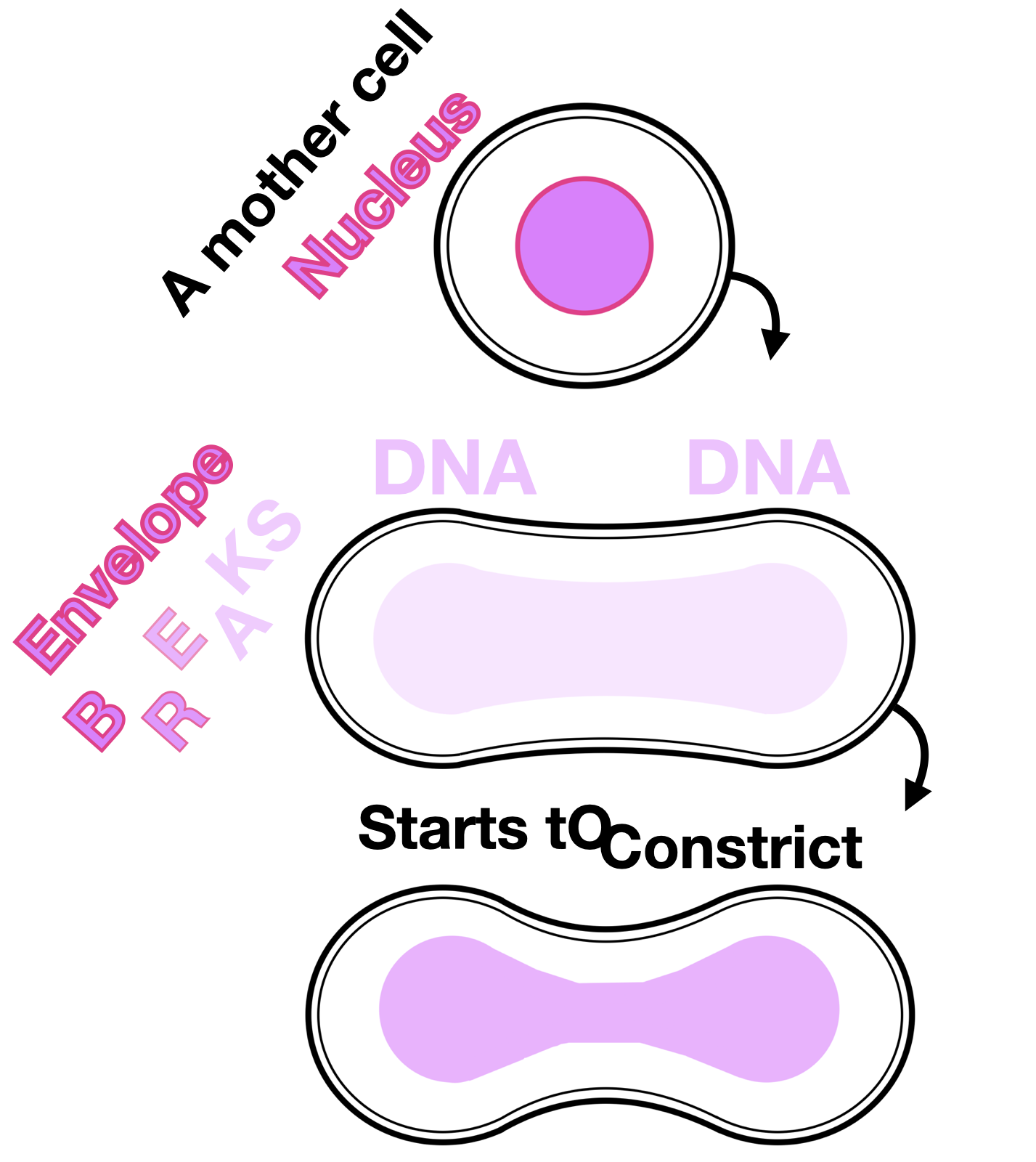
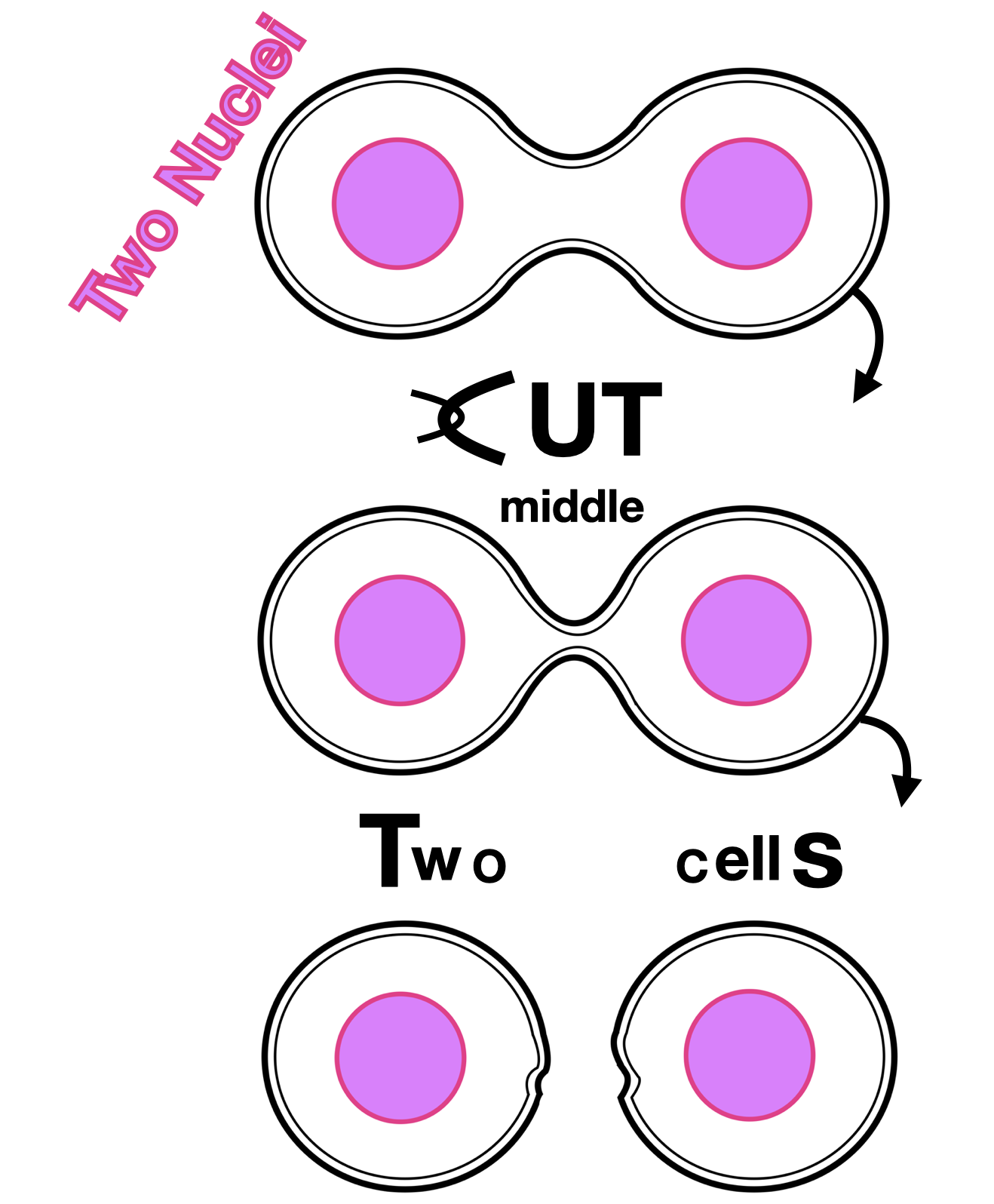
Mitotic division in mammalian cells produces two genetically identical daughter cells. After the cell grows and replicates its DNA, mitosis proceeds through four stages. First, the DNA condenses and the nuclear envelope breaks down; then, the DNA sets align at the cell’s equator. Next, each set is pulled apart to opposite poles (Upper Figure 3). Subsequently, new nuclear membranes reform around each duplicated DNA set. Finally, cytokinesis pinches the cell to divide it into two separate daughter cells (Lower Figure 3).
Figure 3: Mammalian Mitotic Cell Division.
1. Picotto J, Bertrand P, Pennarun G. Mitotic dynamics of the nuclear lamina in the backstage of chromosome separation. Commun Biol. 2025.26;8(1):1687. doi: 10.1038/s42003-025-09081-w
2. Anjur-Dietrich MI, Kelleher CP, Needleman DJ. Mechanical Mechanisms of Chromosome Segregation. Cells. 2021.22;10(2):465. doi: 10.3390/cells10020465
3. Shah R, Panagiotou TC, Cole GB, Moraes TF, Lavoie BD, McCulloch CA, Wilde A. The DIAPH3 linker specifies a β-actin network that maintains RhoA and Myosin-II at the cytokinetic furrow. Nat Commun. 2024.19;15(1):5250. doi: 10.1038/s41467-024-49427-2


Leave a Reply